4214 Milwaukee Street, Madison, WI 53714


Skin Allergies in Pets: How Veterinary Dermatology Can Help When Home Remedies Fail
Skin allergies are among the most common and frustrating conditions affecting dogs and cats. Many pet owners first reach for oatmeal baths, coconut oil, or antihistamines, hoping for quick relief—only to watch their pet keep scratching weeks later.
This guide explains what pet skin allergies really are, why DIY approaches often miss the mark, and how professional veterinary dermatology services provide the targeted diagnosis and treatment your pet genuinely needs. You’ll also find answers to the most searched questions about this topic, so you can make informed decisions for your furry family member.
What Are Skin Allergies in Pets?
Just like people, pets can develop hypersensitive immune responses to everyday substances. When a dog or cat encounters a trigger—whether inhaled, ingested, or touched—the immune system overreacts, producing inflammation in the skin.
The Three Main Types
Environmental allergies (atopic dermatitis): Reactions to pollen, mold spores, dust mites, and grass. Symptoms typically worsen seasonally but can become year-round as the condition progresses.
Food allergies: Contrary to popular belief, food allergies in pets are rarely caused by grains. Proteins like chicken, beef, dairy, and eggs are far more common culprits. They develop over time, meaning a pet can suddenly react to something it has eaten for years.
Flea allergy dermatitis (FAD): A single flea bite can trigger an intense allergic response in sensitive animals. Even pets on preventive flea control can occasionally be exposed.
Signs Your Pet Has a Skin Allergy
Early recognition saves your pet weeks of discomfort. Watch for:
- Persistent scratching, biting, or licking—especially at paws, ears, belly, and armpits
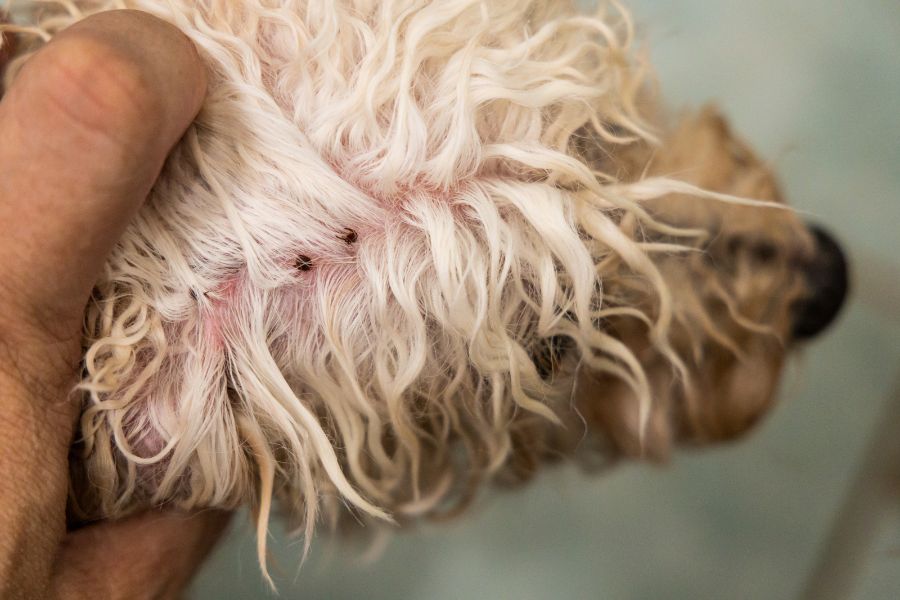
- Red, inflamed, or thickened skin patches
- Recurring ear infections or a yeasty smell
- Hair loss or hot spots
- Watery eyes and sneezing (more common in cats)
- Chronic paw chewing that leads to rust-colored fur staining
These signs often overlap with other skin conditions, which is a key reason accurate diagnosis matters so much.
Why Home Remedies Frequently Fall Short
A quick internet search turns up dozens of home remedies for pet skin allergies—apple cider vinegar rinses, fish oil supplements, and baking soda pastes. While some supportive measures like omega-3 fatty acids do offer mild benefit, they rarely resolve the underlying problem.
Here’s why:
They treat symptoms, not causes. Without knowing the specific allergen, you’re managing flare-ups indefinitely rather than reducing your pet’s overall allergen load.
Incorrect products can worsen irritation. Essential oils, certain human shampoos, and undiluted vinegar can disrupt the skin barrier, making inflammation worse.
Delayed professional care allows secondary infections. Scratched, broken skin is a gateway for bacterial and yeast infections that require prescription treatment. The longer an allergy goes unmanaged, the more layers of infection you have to treat.
Over-the-counter antihistamines are largely ineffective for pets. Studies show they help fewer than 30% of allergic dogs and have limited evidence in cats.
If your pet’s skin problems have lasted more than two to three weeks or keep coming back, it’s time to consult a veterinarian near you for a proper evaluation.
How Veterinary Dermatology Works
A dermatology specialist goes far beyond a general exam. The process typically involves:
Step 1 — Thorough History and Skin Examination
The specialist reviews your pet’s full medical history, diet, environment, and the seasonal pattern of symptoms. This context alone can narrow down likely allergy categories.
Step 2 — Ruling Out Look-Alike Conditions
Mange, ringworm, hormonal imbalances, and autoimmune diseases can all mimic allergy symptoms. Skin scrapings, cytology, and sometimes biopsies help rule these out before allergy testing begins.
Step 3 — Allergy Testing
- Intradermal (skin) testing is the gold standard for identifying environmental allergens. Small amounts of common allergens are injected just under the skin to observe reactions.
- Serum (blood) allergy testing is a less invasive alternative used when intradermal testing isn’t practical.
- Elimination diet trials lasting 8–12 weeks are used to confirm or rule out food allergies.
Step 4 — Customized Treatment Plan
Based on results, your specialist may recommend:
- Allergen-specific immunotherapy (ASIT): Custom allergy shots or sublingual drops that gradually desensitize your pet’s immune system—the closest thing to a cure for environmental allergies.
- Targeted prescription medications: Newer options like oclacitinib (Apoquel) and lokivetmab (Cytopoint) specifically interrupt the itch-inflammation cycle with fewer side effects than traditional steroids.
- Medicated shampoos and topical therapies: Used to restore the skin barrier and clear secondary infections.
- Dietary management: Switching to a hydrolyzed protein or novel protein diet under professional guidance.
The Role of Skin Barrier Support
One underappreciated aspect of allergy management is skin barrier repair. Allergic pets often have a genetically compromised skin barrier that lets allergens penetrate more easily. Regular use of ceramide-based moisturizers and fatty acid supplementation—guided by your specialist—can meaningfully reduce how often flare-ups occur.
Living with a Pet That Has Chronic Skin Allergies
Managing a pet with ongoing allergies requires a team effort. Keep a symptom diary to track what triggers flare-ups. Wash bedding weekly in hot water. Use HEPA air purifiers in rooms where your pet sleeps. Stay consistent with flea prevention year-round.
Most importantly, maintain regular follow-up appointments. Allergen profiles can shift over time, and treatments may need adjusting. Finding a veterinarian near you who takes a long-term, relationship-based approach to your pet’s skin health makes a measurable difference in outcomes.
Conclusion
Pet skin allergies are complex, chronic conditions that deserve more than a topical fix from the medicine cabinet. When home remedies fail—and they often do—veterinary dermatology offers the diagnostic tools and treatments that actually address the root cause. Early intervention reduces your pet’s suffering, prevents secondary infections, and saves you money in the long run.
If you’re located in Madison, consider reaching out to Truesdell Animal Care Hospital and Clinic—a practice where genuine compassion and deep community roots come together to give your pet the skin health they deserve. Their team is ready to help you move past guesswork and toward real, lasting relief.
Frequently Asked Questions(FAQs):
Q1: Can pets develop skin allergies at any age?
A: Yes. While allergies often appear in pets between one and three years old, they can develop at any age. A pet that was symptom-free for years can still develop new sensitivities as its immune system changes over time.
Q2: How long does an elimination diet trial take for food allergies?
A: A proper food elimination trial takes 8–12 weeks. During this period, your pet must eat only the prescribed novel or hydrolyzed protein diet—no treats, flavored medications, or table scraps—to produce reliable results.
Q3: Are certain dog or cat breeds more prone to skin allergies?
A: Yes. Bulldogs, Labrador Retrievers, Golden Retrievers, West Highland White Terriers, and Shar-Peis have higher rates of atopic dermatitis in dogs. In cats, Siamese and related breeds show higher allergy susceptibility than most other breeds.
Q4: Is allergy immunotherapy (allergy shots) safe for pets?
A: Allergen-specific immunotherapy is considered very safe and is effective in roughly 60–80% of dogs with environmental allergies. Side effects are rare and usually mild. It’s the only treatment that addresses the underlying immune dysfunction rather than just masking symptoms.
Q5: Can a pet be allergic to its own pet dander?
A: Pets are not typically allergic to their own dander. However, they can react to dander from other animals in the household, and humans in the home can certainly be allergic to pet dander, which is a different but sometimes related household concern.
Q6: How much does veterinary dermatology treatment typically cost?
A: Costs vary by region and treatment complexity. Allergy testing generally ranges from a few hundred to over a thousand dollars. Immunotherapy is an ongoing investment, but often cheaper long-term than repeated symptomatic medications. Your specialist can outline options based on your pet’s needs and your budget.